54 Teams Took On a Growing AI Problem at IIIT Pune: How Much Control Should We Give AI?
 Insta Story Network
PUNE, 8 August 2026 — Ask an AI a question and it answers. Ask it to handle something and it acts. That second sentence is new, and it is the one causing all the trouble.
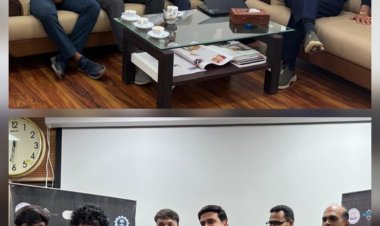
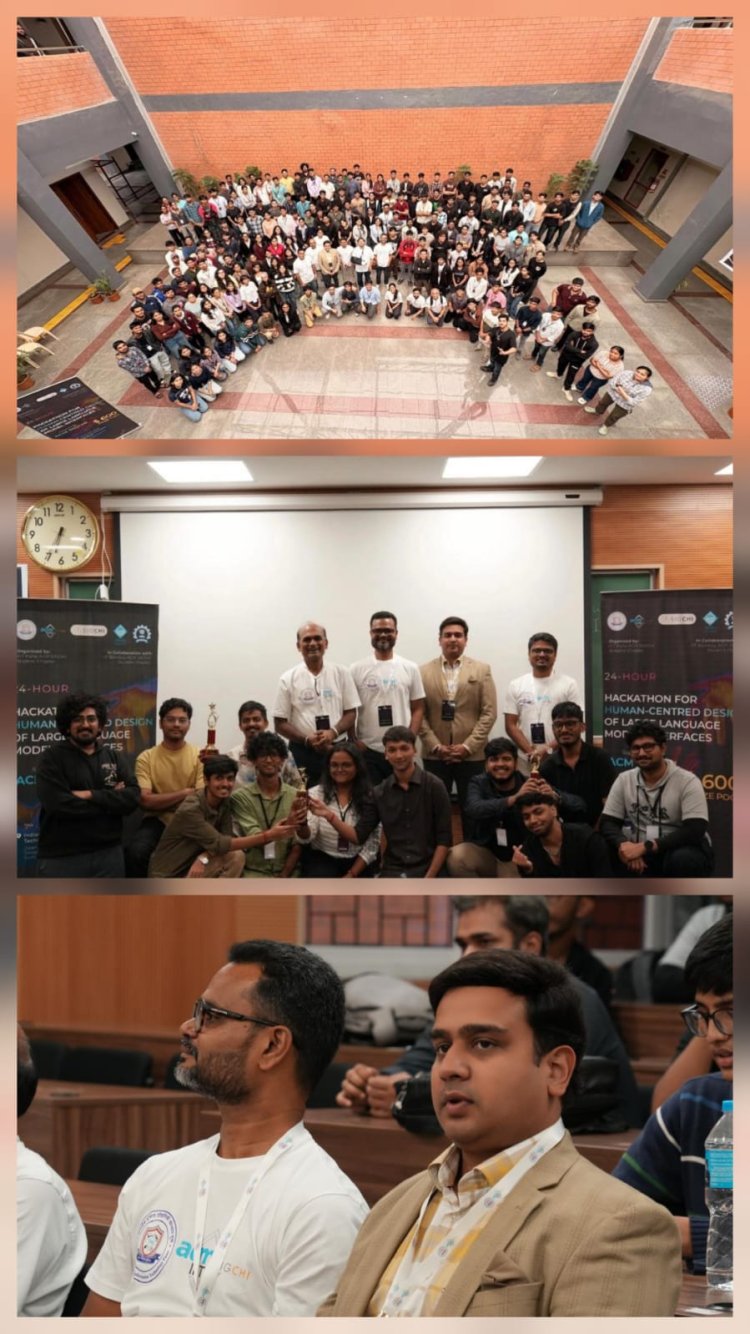
Fifty-four teams from across India spent twenty-four hours on it at the Indian Institute of Information Technology, Pune across 7 and 8 August. Ten reached the final round, judged on the second day. A research team from TCS Research, Pune won, ahead of Jain University, Bangalore and a home team from IIIT Pune, from a $600 prize pool.
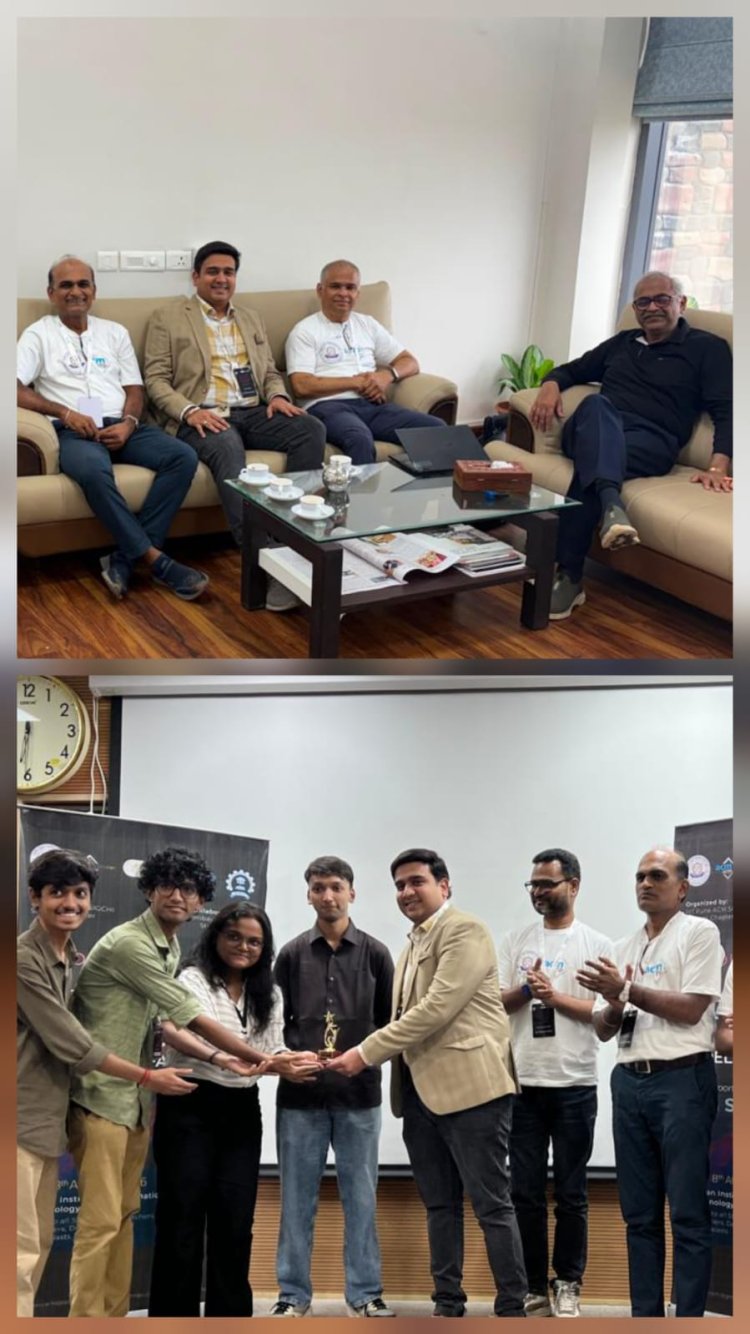
Judging the finalists and presenting the awards was Pratiek Sanklecha, an entrepreneur, technologist and inventor, founder and CEO of Pune-based Uniberry Technologies and a granted patent holder in AI — an industry practitioner scoring the work alongside academic expertise in human-computer interaction.
The Human-Centered AI and LLM Hackathon was run by the IIIT Pune ACM SIGCHI Student Chapter with the IIT Bombay ACM SIGCHI Student Chapter, supported by the ACM SIGCHI Development Fund, under UN Sustainable Development Goals 4 and 9.
Not a coding contest
Teams were not scored on how well their models performed. They were scored on the experience around them — whether an ordinary person can tell what the system is doing, work out how far to trust it, and stay in control when it gets something wrong.
Seven briefs, and none of them straightforward.
One asked teams to show users how a system reached its answer, so a response could be judged rather than simply believed. Another asked for an interface that notices when someone is about to type something sensitive — a password, a medical detail, a bank number — and intervenes without overriding them.
A third asked how a person should decide what an AI remembers, forgets, or keeps only for the current conversation. That question is currently being argued over inside every company shipping an AI assistant.
The rest covered government services, legal information for ordinary citizens, teaching people to prompt more effectively, and AI for rural and low-literacy users.
Why the panel mattered
Putting an inventor who builds AI commercially on a panel of HCI researchers had a practical effect: the questions being examined were ones both sides meet, from different directions.
“The model is rarely the hard part. Accountability is.”
“Enterprise systems used to wait to be told. Now they can act, and designing that well is the most interesting problem in the field right now.”
Sanklecha spent two decades in supply chain, distribution and industrial operations before founding Uniberry in 2017 — environments where a wrong instruction is not a bad score but a wrong shipment, a wrong payment, and someone answerable for it.
“The best teams weren't showing off the model. They were designing the relationship between the person and the system. That's a more mature instinct than I expected in twenty-four hours.”
Organisers described the winning teams as demonstrating strong HCI thinking and thoughtful interaction design — the same qualities the industry judgement had picked out.
The institution behind it
IIIT Pune, an Institute of National Importance established in 2016, hosted the event. Prof. Vineet Kansal, the institute's Director, backed the initiative throughout, support organisers credited with making it possible. Dr. Shrikant Salve, Assistant Professor at IIIT Pune, was among those who organised and ran the two days, working with the student organising team of Roshni Sahoo, Saurav Dabhade, Rachana Jambhalikar, Pravin Khillare and Priya Jadhav, alongside faculty, mentors and volunteers.
Prof. Anirudha Joshi of the IDC School of Design, IIT Bombay, whose research has shaped human-computer interaction work in India for two decades, presented at the event and spoke on Critical AI.
Away from the judging, Sanklecha exchanged views on AI innovation and the future of human-centered computing with Prof. Vineet Kansal, Director, IIIT Pune; Prof. Anirudha Joshi, IDC School of Design, IIT Bombay; Prof. Ganesh Bhutkar, Professor and HCI Researcher, VIT Pune; Dr. Shrikant Salve, Assistant Professor, IIIT Pune; and Mr. Prasanna Kate.
The India dimension
Several of the briefs were pointed at conditions that make this harder in India than almost anywhere.
An AI service explaining government schemes has to work across many languages and every level of literacy, often for someone using such a system for the first time. It has to be honest about the limits of what it knows, because a confidently wrong answer about eligibility falls on the person least able to absorb the cost. The same applies to legal information. The same applies to any rural deployment where connectivity comes and goes and speech may be the only workable input.
These are not simplified versions of problems being worked on elsewhere. In several respects they are harder — and systems that solve them tend to work everywhere else.
“It’s an incredibly exciting time to be working at the intersection of AI, LLMs and HCI,” Sanklecha said, “with enormous possibilities ahead for computer science, innovation and India.”
Pratiek Sanklecha is founder and CEO of Uniberry Technologies.